UI/UX Design
Web Application
Prototyping
Industry
Software Development
Headquarters
San Francisco, USA
Services
UI/UX design
Prototype
Link
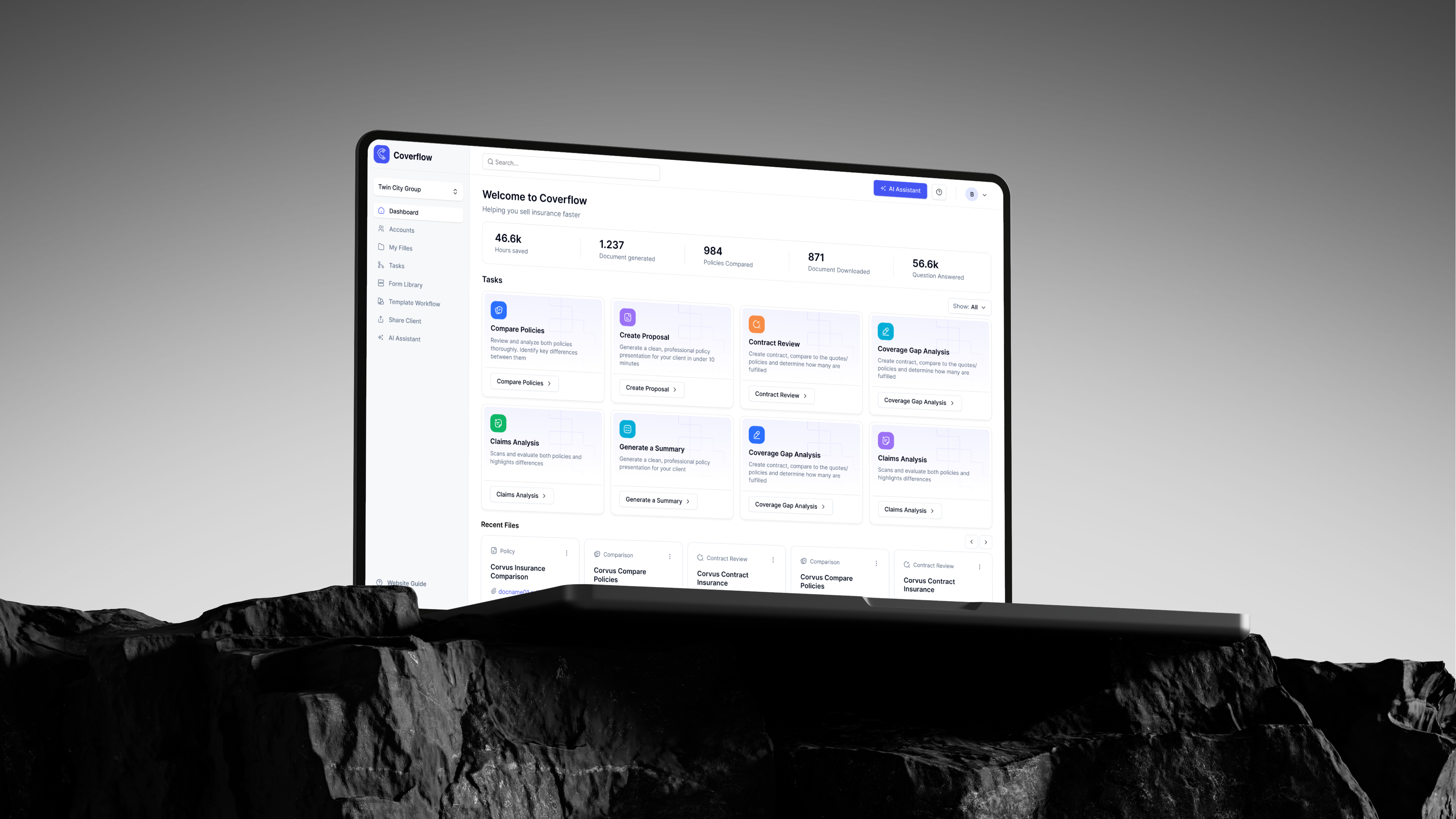
Client websiteCoverflow is a venture-backed AI platform built specifically for the insurance industry. Backed by $4.8M in funding, the product automates the most time-consuming parts of an agency's daily operations: policy checking, coverage analysis, proposal generation, and AMS data updates. The platform targets independent brokerages and mid-to-large insurance agencies across the US — teams that handle high volumes of documentation and live under constant pressure to avoid errors, stay competitive, and grow revenue without proportionally growing headcount.
Design case
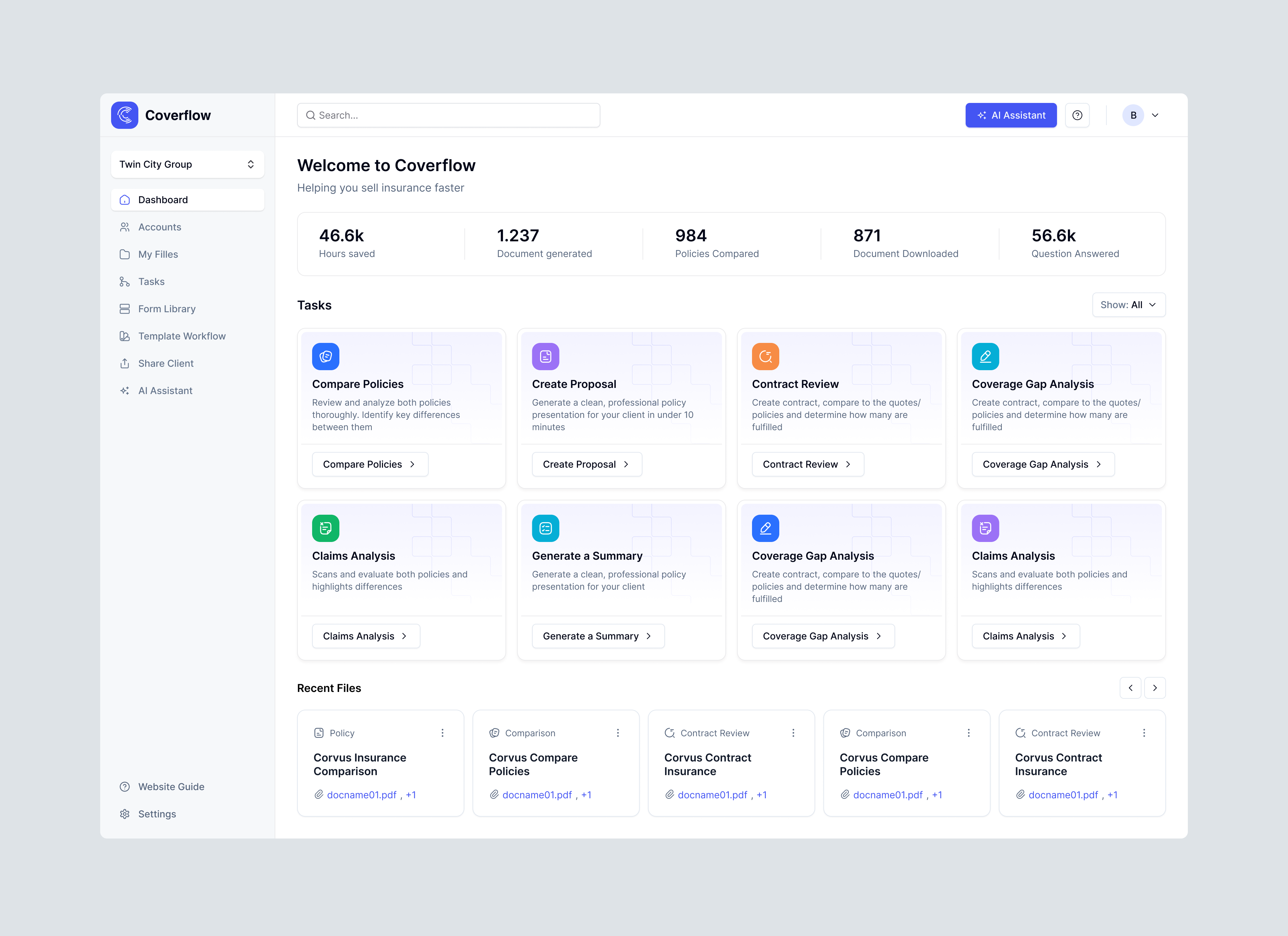
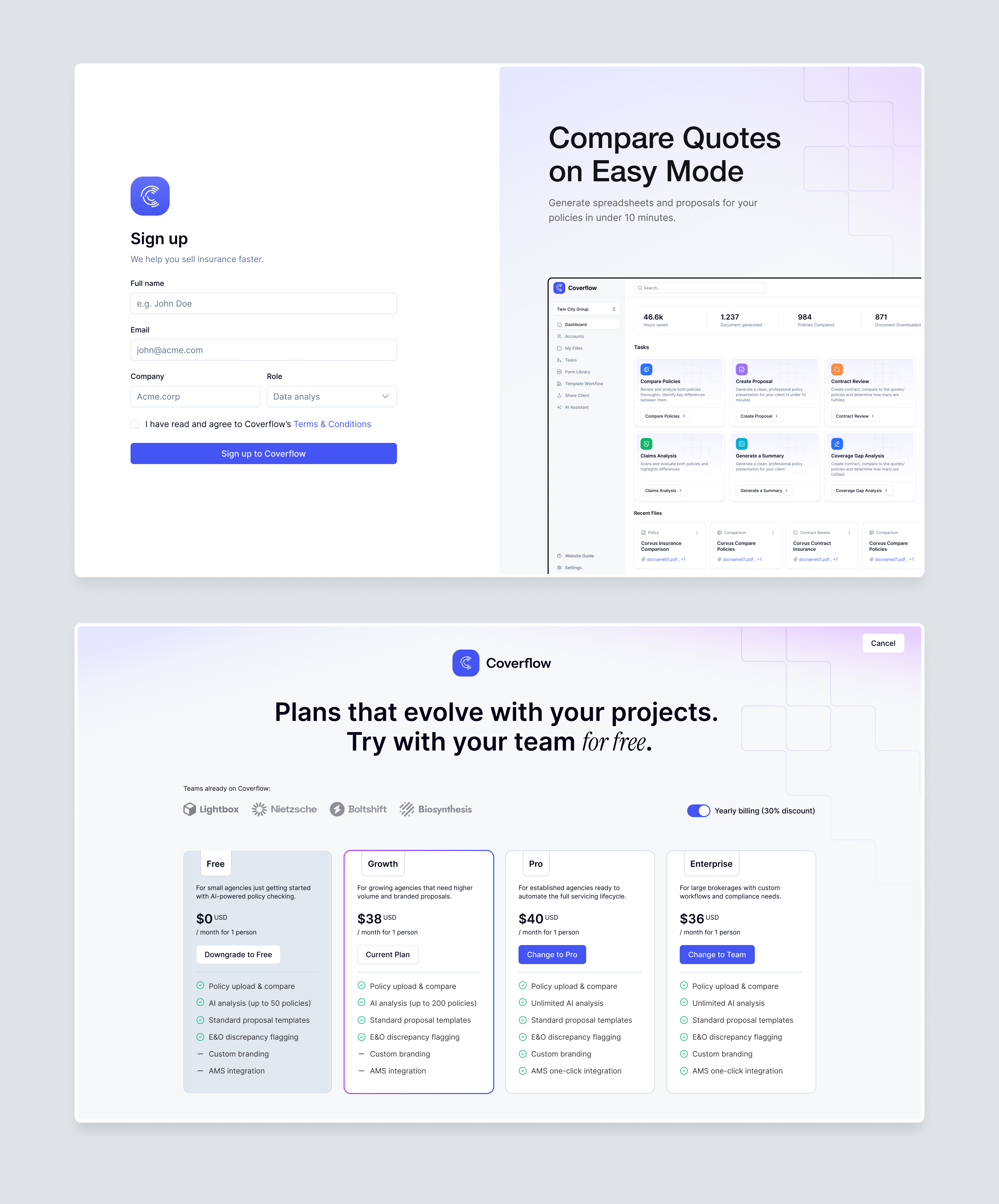
The design case encompassed a comprehensive rethinking of Coverflow's core UX, scoped entirely to the desktop experience. Navigation was rebuilt from the ground up — restructured to reflect how insurance professionals actually move through their work, reducing the cognitive load of switching between tasks and making the platform's depth immediately legible without overwhelming new users.
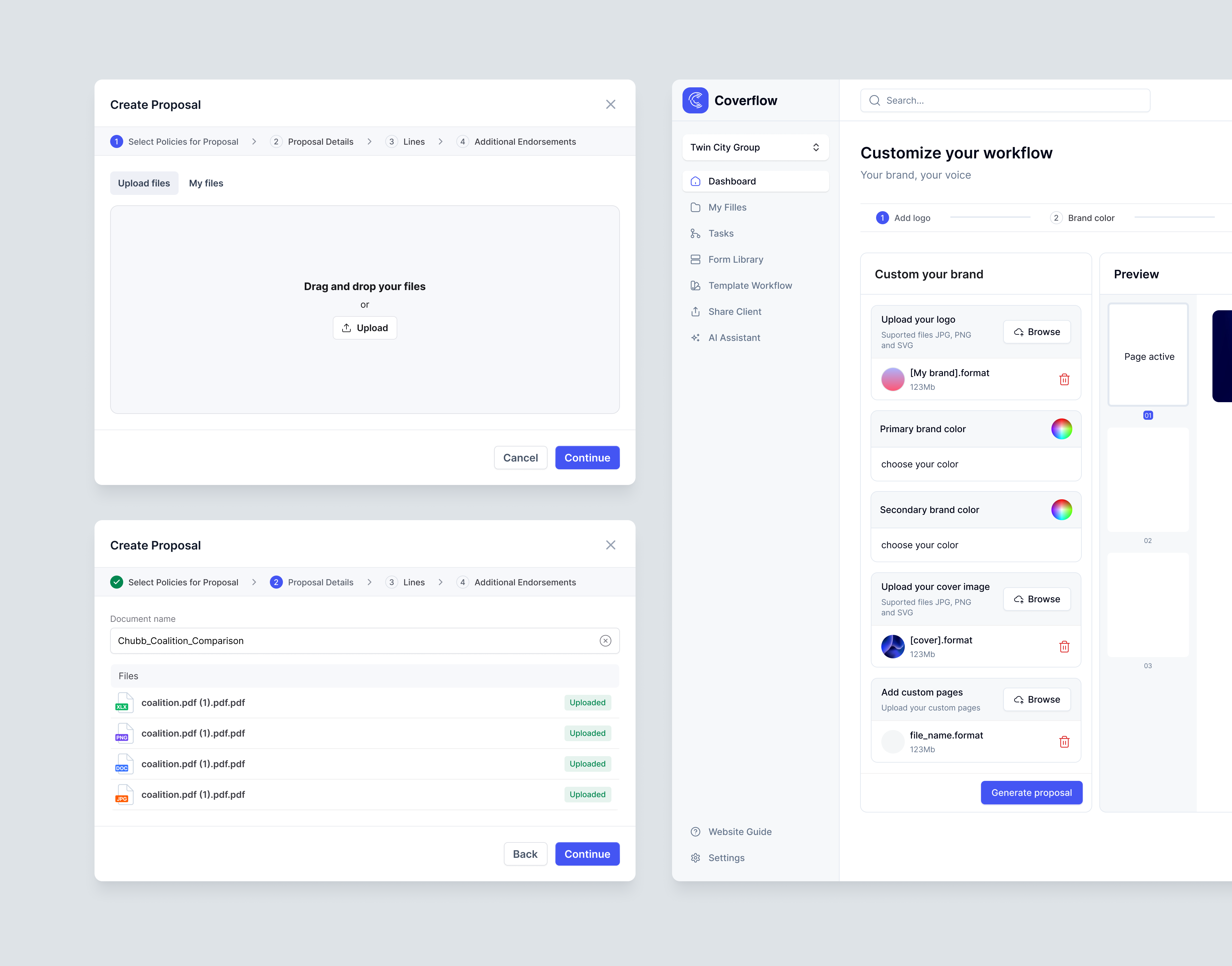
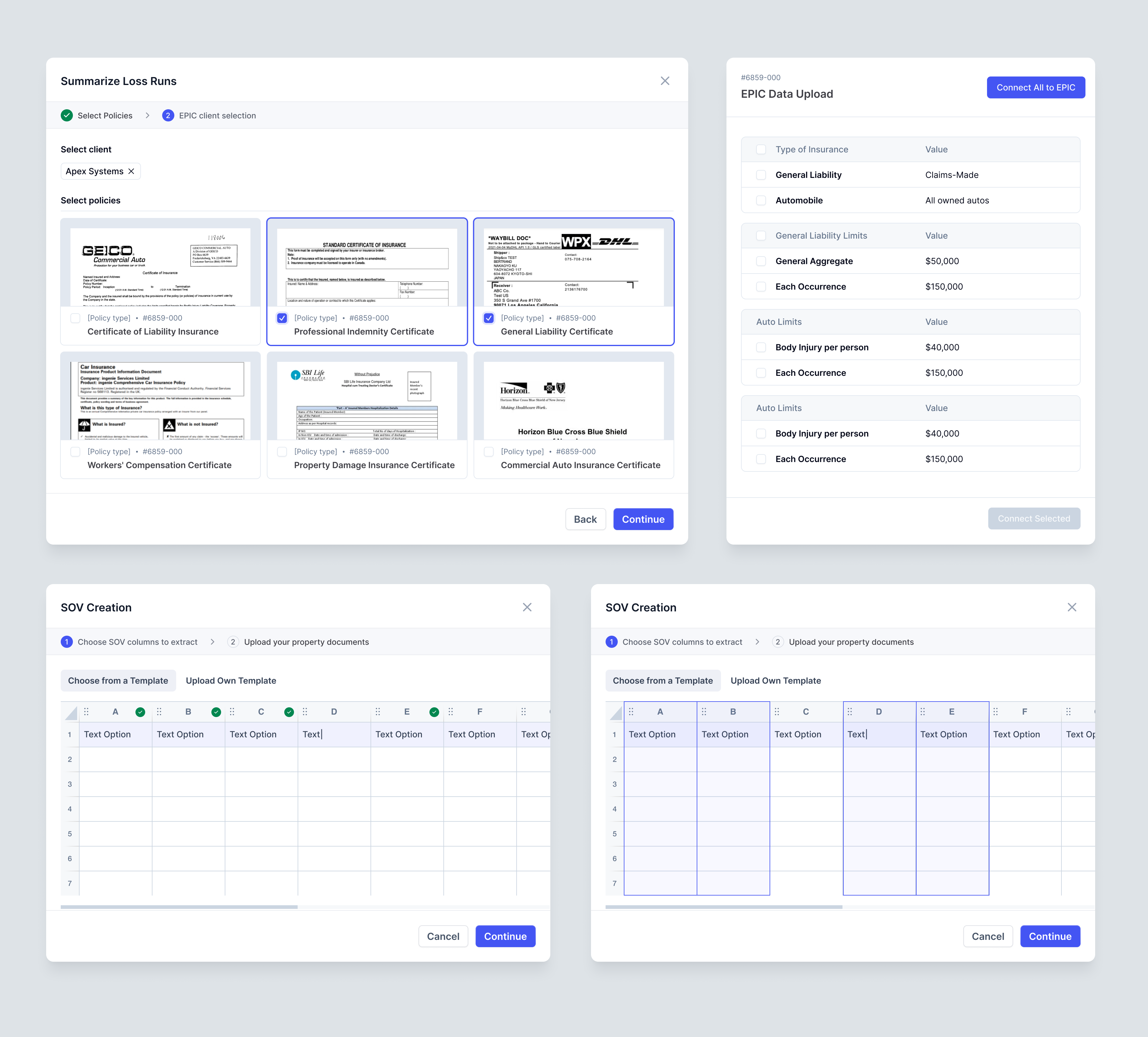
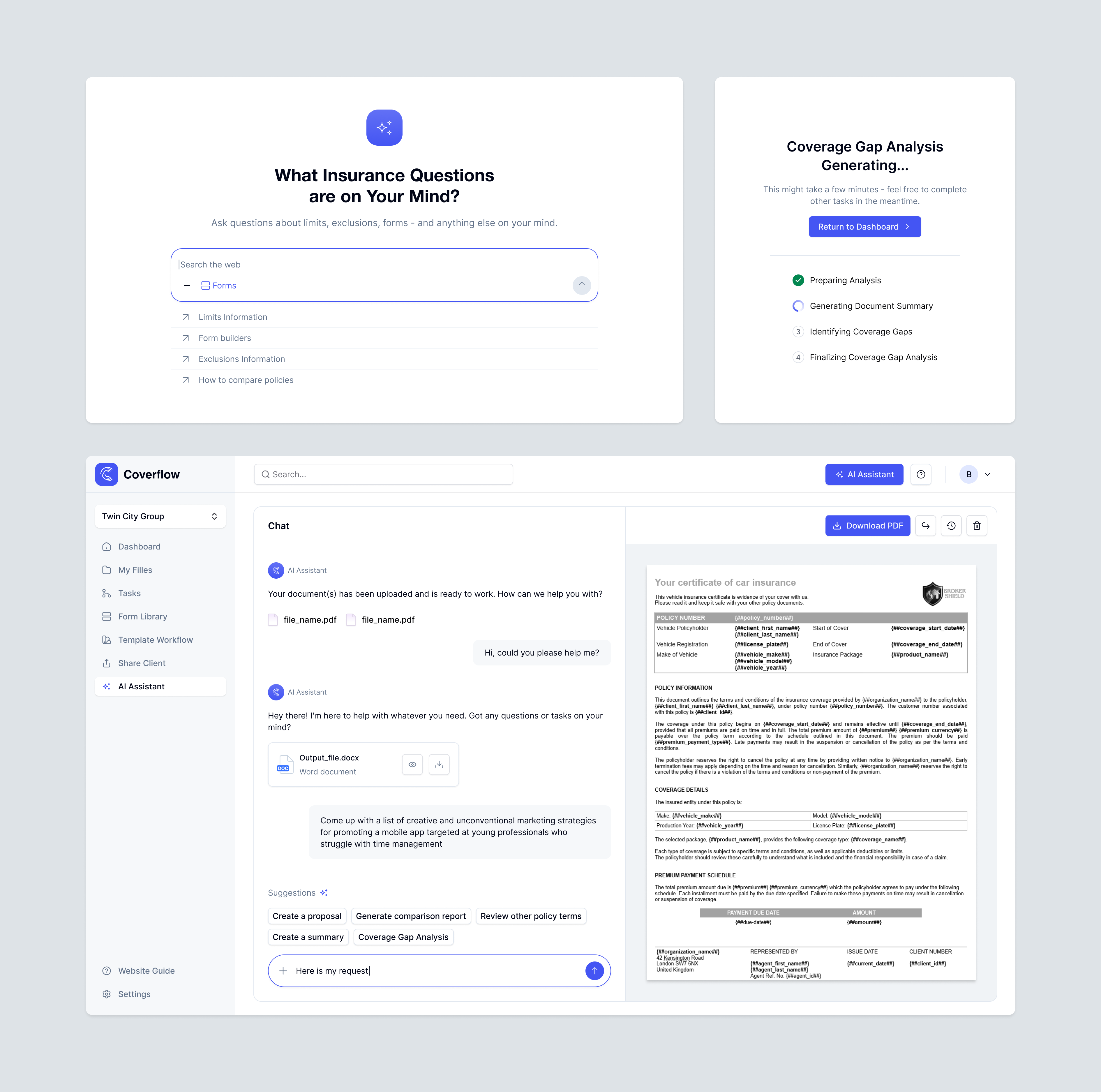
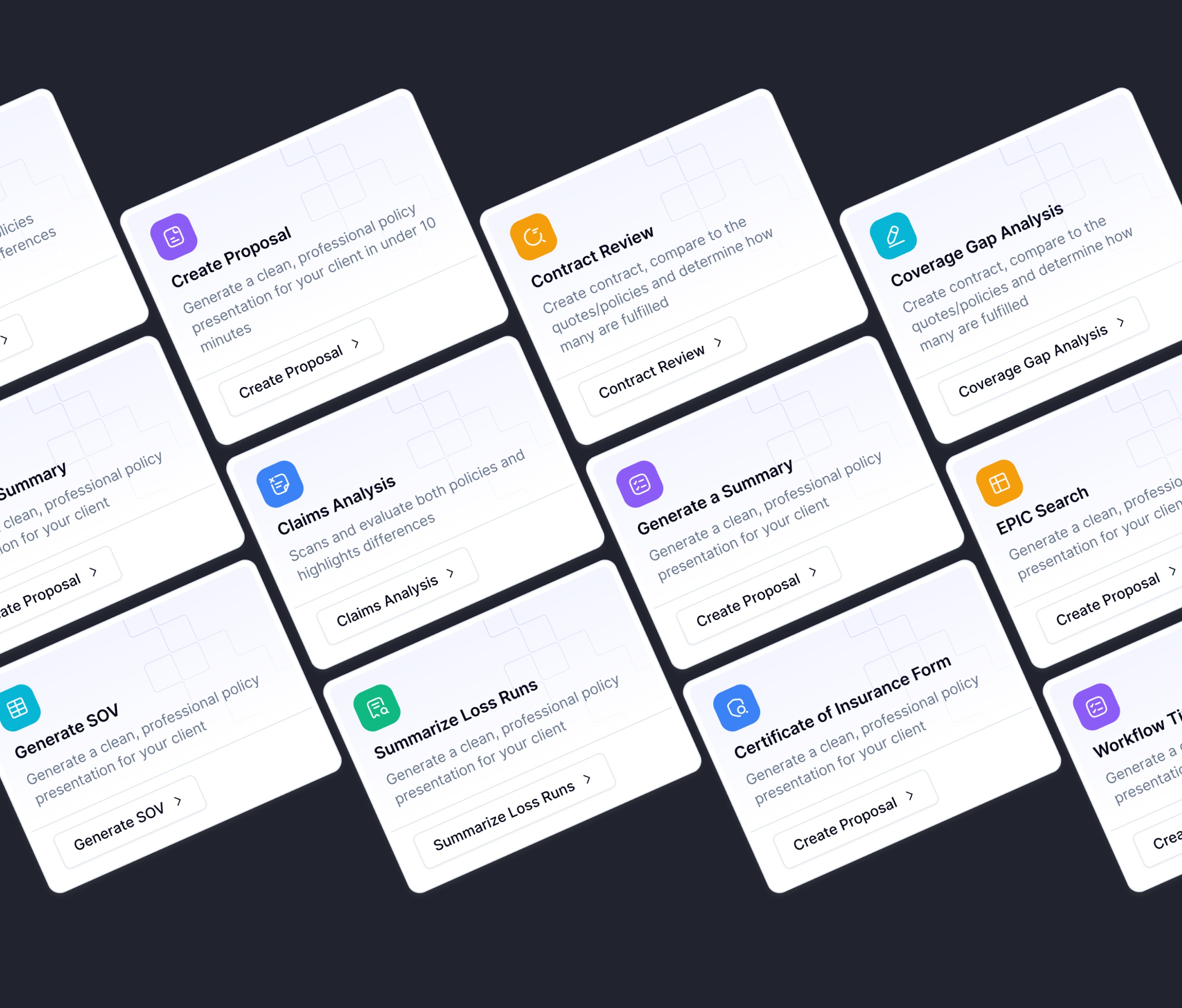
Key workflows were designed for the most frequent and high-stakes client actions: working with insurance policies, running coverage comparisons, flagging discrepancies, and generating proposals. Each workflow was mapped from the user's intent to the outcome, eliminating unnecessary steps and decision points that created friction in the original experience.
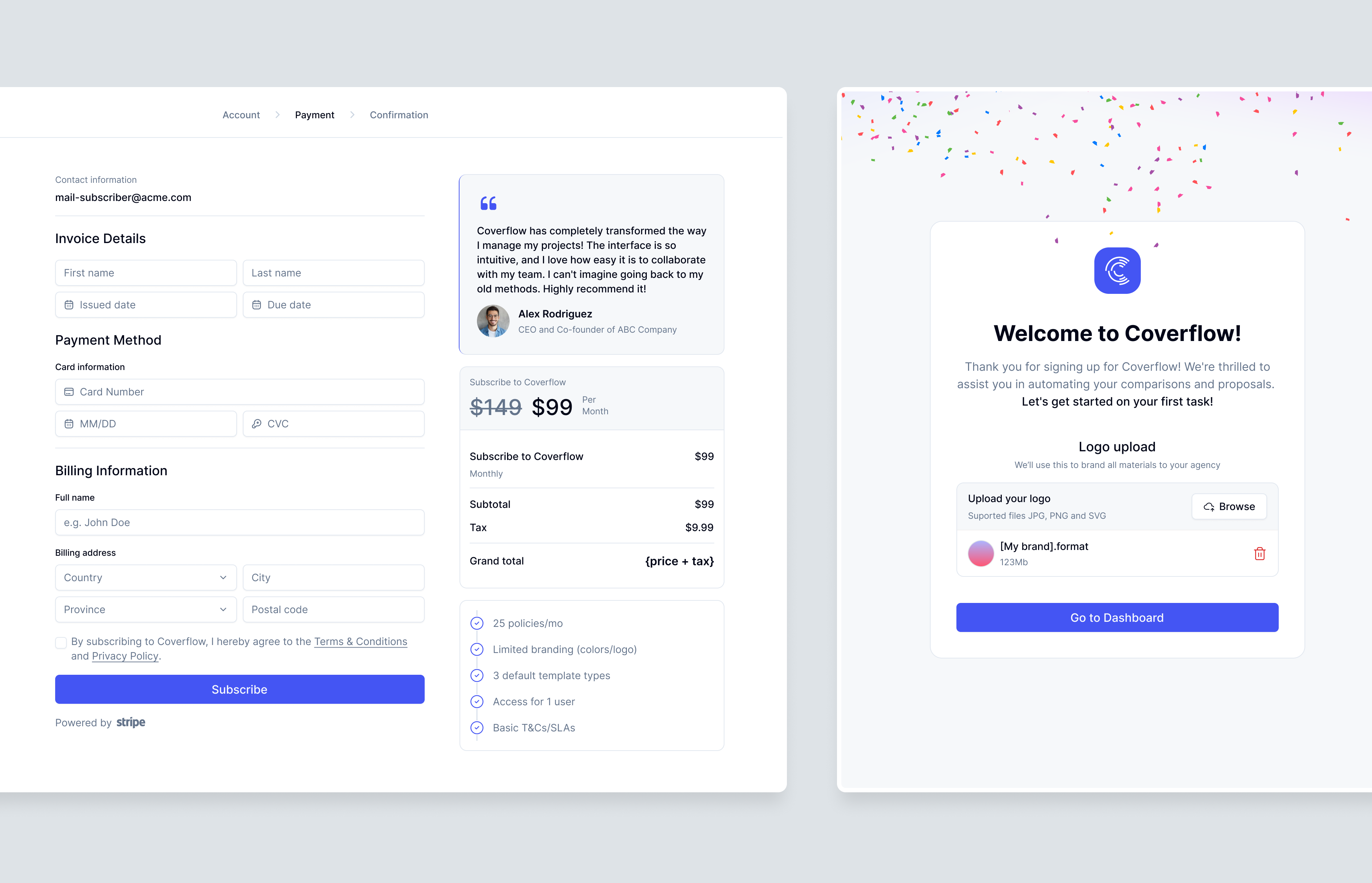
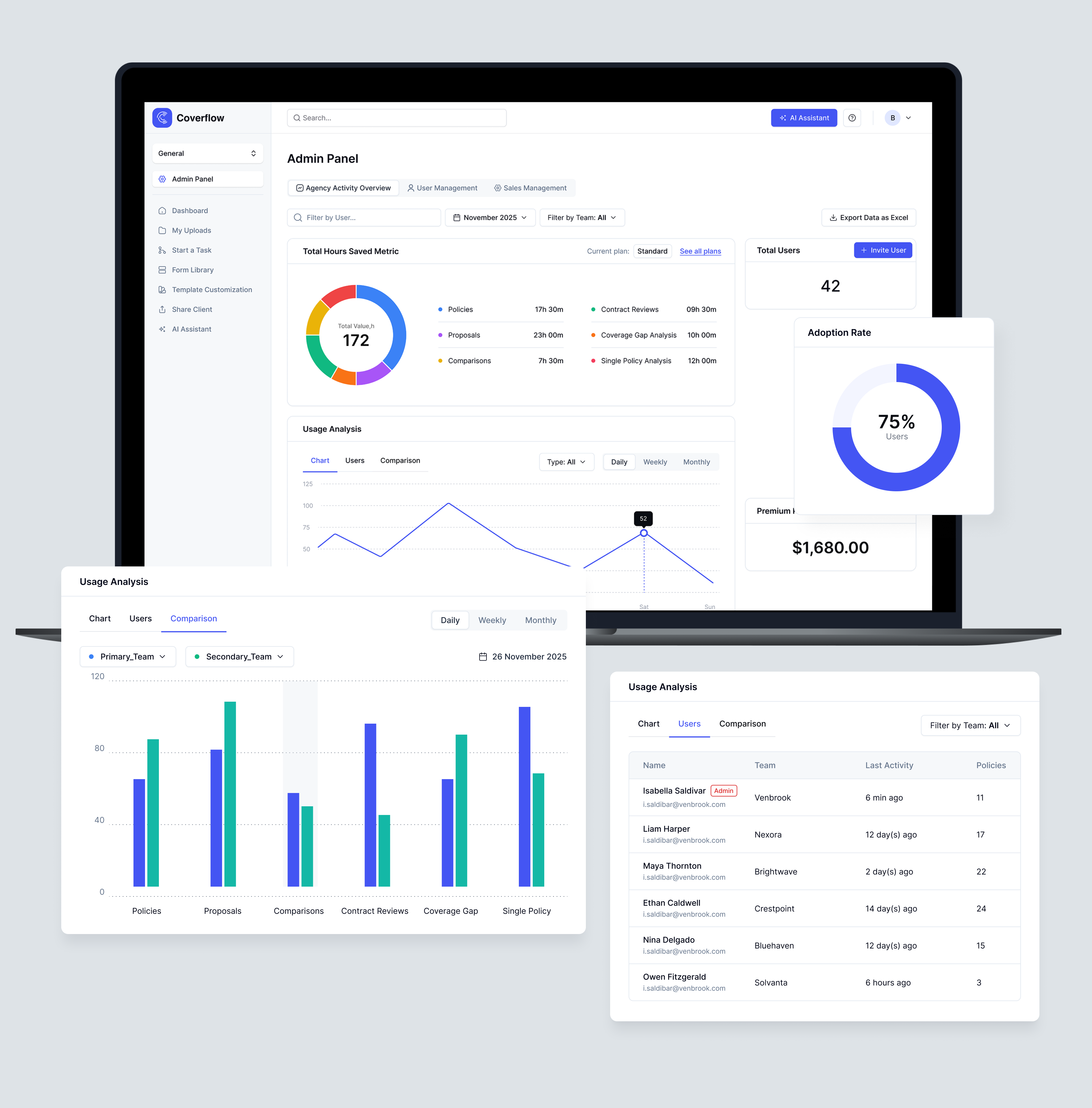
An admin panel was designed to give organizations control over their own environment — managing team settings, configuring integrations, and monitoring usage statistics and performance data.
All primary UX flows were reexamined and redesigned with a focus on clarity, efficiency, and error prevention — areas that matter acutely in insurance, where a missed detail carries real professional and financial consequences.
A design system was built and connected across the entire platform. It gives the product the flexibility to be configured and customized for different agency contexts, while maintaining visual and functional consistency. For the development team, it significantly reduces implementation time by providing a single source of truth for components, states, spacing, and interaction patterns — making handoff straightforward and future iterations faster.
Result
Years of experience
Clients in total
Projects delivered


.png)